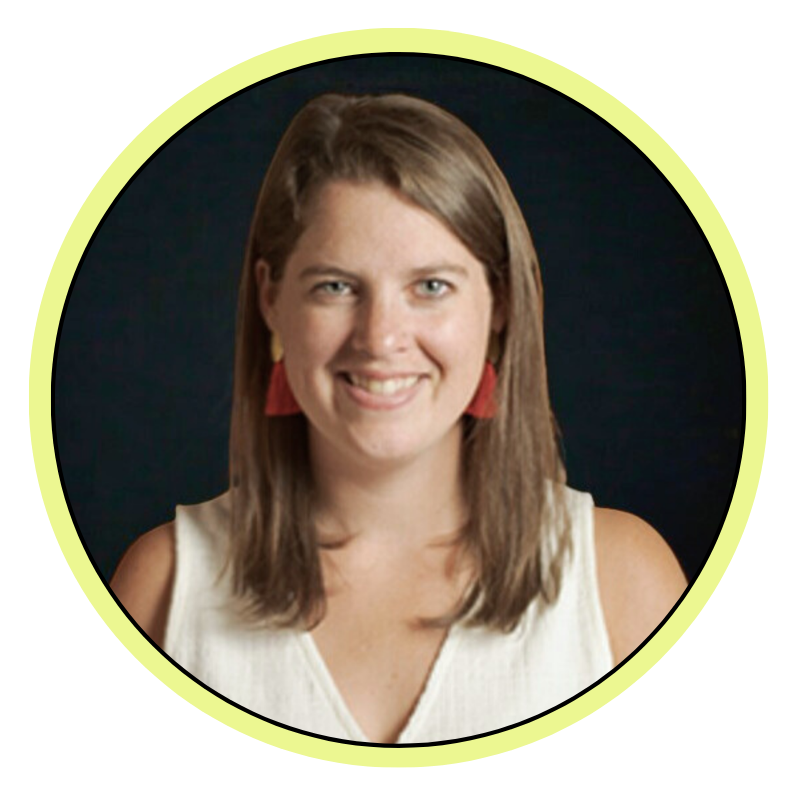
LILY BOND: Thank you, everyone, for joining today's session, a spotlight chat on making the case for full video accessibility with UW-Madison. My name is Lily Bond. I use she/her pronouns and I'll be moderating today's webinar. I'm the Chief Growth Officer at 3Play Media. I've been here for about 12 years. I am a white woman in my 30s with brown hair and glasses, wearing a green sweater. With that taken care of, I'd like to welcome today's guest speaker, Ruben Mota. Thanks for joining us, Ruben.
RUBEN MOTA: Hi. Good afternoon, Lily. Great to be here. I kind of can't believe it's not a Friday late afternoon when we come to meet.
LILY BOND: Ruben and I met on Fridays after 4:00 PM for many, many months as we were working towards the compliance plan that we will talk through today. So you're lucky to see us on a Thursday afternoon instead. Ruben, I'd love to kick things off by allowing you to introduce yourself and share a little bit about your role as the ADA Coordinator within the Office of Compliance at UW-Madison.
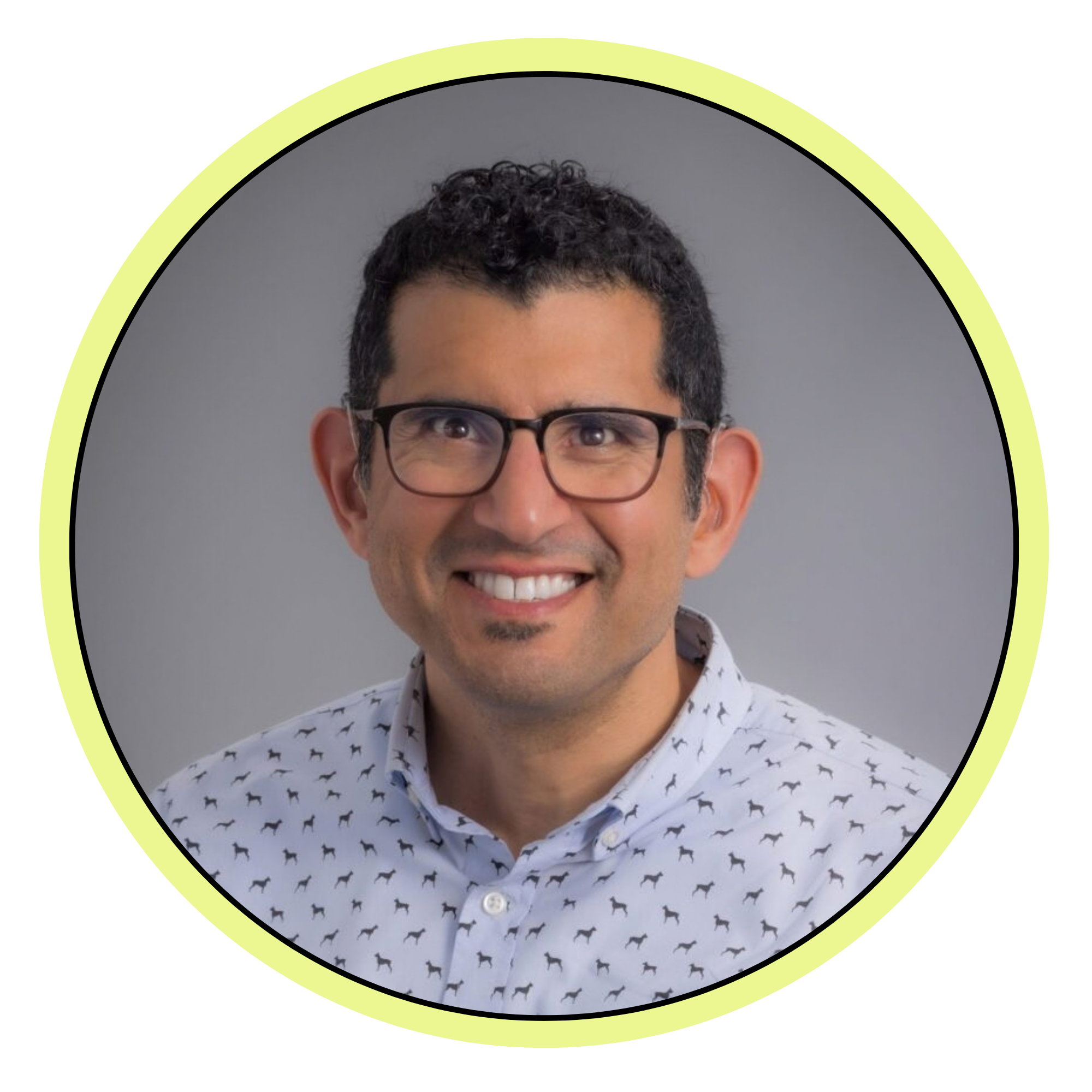
RUBEN MOTA: Sure. Yeah, I'm more than happy to share a little bit about myself. Let me start off with my pronouns. I use he/him/his pronouns and I am Ruben Mota, the Americans with Disabilities Act Coordinator or ADA Coordinator at the University of Wisconsin-Madison. A brief visual description of me. I am a man with glasses and brown skin, button-down shirt. And I am joining you today from my university office. And I just want to say hello to everyone and thank you for joining us.
So I have been at the university, Lily, for-- I believe this is the start of my 14th-- yeah, my 14th year. I started off in our Disability Services Office, known as the McBurney Disability Resource Center, before transitioning to the ADA coordinator role in the Office of Compliance. I have been doing disability compliance or advocacy of some kind my entire career, so over 20 years at this point.
LILY BOND: Amazing. And Ruben, we're going to talk today about your implementation of the Title II ruling under the ADA, specifically as it applies to video accessibility. To give us a sense of scale to begin with, you are managing ADA compliance at UW-Madison. How much video content do you have? What is the size of UW-Madison in context for the audience?
RUBEN MOTA: Sure, yeah. So in my ADA coordinator role, because UW-Madison is so big, I coordinate disability access and compliance for the university broadly. So we have a Student Disability Resource Center. We have an Employee Disability Resources Office that ensures that job applicants and employees are receiving accommodations. We have, as I mentioned earlier, our Student Disability Resource Center who are supporting our disabled students.
Then we have a Center for User Experience, which is working along with my office to build out the program that we are developing in response to this new ADA requirement. Just to give a little bit of an overview of UW-Madison, so we are one of 13 public universities in the state of Wisconsin. We comprise the universities of Wisconsin. We are one of two research I institutions.
So we have 28,000 employees. We have over 50,000 students. At any one time, we can have over 100,000 individuals on our campus. So we have over 400 buildings and we are a highly decentralized institution. So we are comprised of 14 different schools and colleges, so letters from science, engineering to our agriculture, life sciences, et cetera. And then we do have administrative units such as central administration, housing, and student affairs.
What's really unique about Madison, but not necessarily atypical of the Big Ten schools, is that each of our schools and colleges essentially operates its own administrative infrastructure, so that means they could have their own IT staff, their own human resources staff, instructional design teams, communicators, and of course, faculty and staff.
LILY BOND: Quite a large task ahead of you in coordinating across all of these groups. And your role as the ADA coordinator does span all of these different institutions, schools, groups. Yes?
RUBEN MOTA: It does, yes. This is a huge endeavor for us, compliance, especially with developing our digital accessibility compliance program. When we were starting to do some initial analysis, just to give you a sense of the scope, Lily, is that we, just looking at our number of websites, we determined that we had at least 7 million web pages out there and a lot of multimedia content, which I'm happy to get into as we unpack our time together.
LILY BOND: Yeah, we will definitely get into it, and I'm sure everyone will appreciate hearing how you think about something of that scale and break it down into something that feels achievable, instead of something that feels really overwhelming. Because I hear 7 million websites and I get overwhelmed. I'm sure when you found that were like, oh, man, this is going to be a big project to figure out. So your role is centralized. Can you tell me a little bit about the other tools or procurement that is centralized in a system that is mostly decentralized that might be important context for this conversation around video accessibility?
RUBEN MOTA: Absolutely. So I think there are two really critical components of centralization that we do offer to the university. And by we, I mean our Division of Information Technology. So this is a campus unit that offers tools for the university to use. So for example, Outlook, Microsoft for email, and Word, and PowerPoint, et cetera. One of the enterprise or university wide tools that everyone can use is our learning management system, Canvas. And then we also offer a centralized multimedia content management system, which is our Kaltura MediaSpace.
So this means that all of our faculty, instructors, someone like me who's academic staff-- I'm not an instructor-- I can use these tools to develop courses or to store my multimedia that maybe I'm posting onto a website, or I'm going to use as part of my program.
LILY BOND: Perfect. Thank you for the level setting up front. I now want to take us back to April of 2024, when the Title II ruling came out. Tell me a little bit about your first reaction to this rule, what you started with, and how you kind of reacted to this ruling as a starting point.
RUBEN MOTA: Wow, you're taking me back in time, Lily. It feels like it's been ages since this rule was enacted. So I recall actually being at the Ohio State University. I was with some colleagues from Big Ten, ADA coordinator colleagues. We were at the Ohio State University Multiple Perspectives Conference when this rule came out on April 24 of 2024.
LILY BOND: So you were with the other ADA coordinators for the Big Ten while this came out. Tell me a little bit about that because you must have all-- what a wonderful place to be hearing that news with all of your colleagues.
RUBEN MOTA: We were all super excited. Of course, we were reading the regs, the regulations that the Department of Justice had put out. It was, of course, a topic of conversation at our evening dinner. In addition to attending this conference, we were having a meeting as well. And so it was a topic of conversation as well.
LILY BOND: Wow, the agenda must have pivoted dramatically.
RUBEN MOTA: Yeah. So I recall making my way back to Madison. And at that time in 2024, we at the University of Wisconsin-Madison, we had actually just updated our accessibility policy. We had a web accessibility policy that was passed in 2001. It was in need of an update, and so we actually updated it about a year before the-- one or two years before the rule. And so I remember going through the rule and looking at our policy and going, oh gosh, yeah, we have some additional updates that we need to make.
But what we did was we had a working group at that time, Lily, that was working to implement the policy. And my colleague and I, we realized that we actually need to get a really large discovery committee together to begin to explore and create a report for leadership as to what is this rule about, what does it entail, what are we required to do, and then also really understand what is the scope of the digital assets that we offer at the university, that we have at the university.
So in other words, not just videos, but how many courses do we have? How many web pages? How many documents in our Google Drive and our Box shared drive, for example, and any other information that we could actually get our hands on in a very decentralized environment? There isn't one place where we could go and get all of the data. So what we ended up doing was, so that rule came out in April 2024.
By the end of December 2024, we had a comprehensive report for our university leadership about the new rule and about the scope of the digital content we had in our university's digital ecosystem that we would need to take action on. So we submitted this report to leadership, not with specific recommendations as to what needs to happen, but with a general request for them to charge a working group or a project team to assign the team a project management support team, and then to have us give recommendations and updates to leadership about what work the university needs to do in order to comply with this new Title II requirement.
LILY BOND: So you basically started by asking leadership for some top down commitment to building a plan.
RUBEN MOTA: Absolutely. So as I stated earlier, UW-Madison is huge. So in order to make our work effective and to make good, meaningful progress towards compliance, we were not going to be able to achieve digital accessibility through a grassroots effort. So that bottom-up approach we knew wasn't going to work. So we really needed that "meet in the middle" approach. So we already have quite a few individuals who for years, have been working on digital accessibility from the unit level up. And so we really needed that endorsement from leadership to meet in the middle and to begin working cohesively together to start complying.
LILY BOND: And did you find that leadership was immediately receptive to this, or did you have to make an argument that this was going to be an important process for them to drive in order to be effective as a system?
RUBEN MOTA: There was definitely no resistance to this. I think, though, not only for our leadership, I think for everyone, is that because we're so decentralized, we didn't yet truly understand the full scope of everything because we haven't lifted or looked under every single rock that you can look under. And I would argue we still haven't because there's so much digital content and assets out there that we use at the university. When we spoke with leadership, there was no resistance at all.
There was support. This is something that they recognize that we need to do and something that the Department of Justice wants us to do.
LILY BOND: Yep. And you said that you kind of diffed what you were doing today and your policy versus what the ruling stated. Tell me a little bit about what video accessibility efforts looked like at UW-Madison before this initiative and what was working. And what did you feel like you were going to need to address with the new ruling?
RUBEN MOTA: So I mentioned that we use Kaltura MediaSpace. We've been using this enterprise video management system for a long, long time. And so what video accessibility looked like before the rule was that we took a reasonable accommodation approach to ensuring that our multimedia is accessible, meaning that it wasn't captioned or audio described. But if someone needed those accessibility features due to disability and were approved for that, then what would happen in Kaltura is that that instructor or that course would have a feature enabled where the instructor could send the content out to have human captions added to it.
If content needed audio descriptions, that was handled through our Disability Resource Center.
LILY BOND: Got it. They were primarily accommodation driven. Yeah.
RUBEN MOTA: Very much so.
LILY BOND: And let's talk a little bit about scope. So once you started digging in, how did your team figure out what compliant meant for video under this ruling versus the accommodation-led approach that you had taken in the past?
RUBEN MOTA: So Lily, before I get into that, I really just want to stress to the audience that while I'm here talking about what the University of Wisconsin-Madison did and is doing, I'm not the one who's been doing all of the work. We've had many, many individuals working on this project. So when it comes to video accessibility we have technical staff working on this project. We have compliance staff, project managers and a lot of other input across our university. So I just wanted to level set that.
With regards to establishing compliant media, it was my colleague and deputy ADA coordinator and I who started to look at the specific requirements under the regulations, which pointed to that Web Content Accessibility Guidelines. And then we really started to look at those guidelines to determine, what is the intent of the ADA with regards to video media accessibility? And so from that analysis, we realized for our videos that have visuals, we need captions. For our content like a podcast that doesn't have videos but is recorded, those need transcripts.
And then a video with important visual elements are going to need audio descriptions. So I've worked in the student disability space, so I recognize the importance of human-generated captions. Because those captions are going to come with speaker labels. They're going to identify who's talking on the video. They also provide that truly equivalent access to background noise, as well as maybe a really important song that's playing in a video that really helps to bring the video to life.
So once we started really looking at the rule, we started to begin to understand, OK, what should we be aiming for in terms of compliance for captioning, and then also for audio descriptions, which requires that the description-- that the visuals are accurately described, that the description is detailed, and that the description is consistent in tone.
LILY BOND: And how did you go about estimating what the video content that you had across the system looked like and what would require these different services?
RUBEN MOTA: Well, that's a great question. So when we did that initial analysis back in fall of 2024, when we were preparing this report for leadership, we actually had a multimedia-- this was the multimedia and social media work group. So they were looking at what are the rules requirements, but also what do we have out there. So we have used Kaltura for quite a while. So we knew that we had about 15 million, 1-5 million minutes worth of videos, and just in that database alone.
Then, we also began to unpack, well, we have media in other spaces, such as our library's digital media archive collection. So maybe historical recordings from the past that someone can check out or visit. So just from that analysis, I was a little bit scared, Lily. I was like, wow. So we need to figure this out because we have 15 million minutes worth of content. However, we went back to the rule. And what the rule says is that need to ensure that digital assets that are part of your university's program, services, and activities are accessible by complying with WCAG.
So when we actually started doing the analysis and digging deeper into those 15 million minutes, what we realize is that that's just the content we have, but not necessarily the content we actually use. And so we refined our analysis by looking at videos that actually have one play, that have been played at least one time. So as we all know, we've taken classes where on the syllabus, it says, here are some additional reading, but maybe we never do them, right? So we started to look at videos that were actually being used in courses.
So just from that analysis, we whittled down this 15 million minutes down to about 5, 5.5 million minutes of content.
LILY BOND: And I think a lot of schools get stuck at that step where you have to make a decision about what your policy is on content to include in the first place. Was it a simple decision for you to set the bar at one play, or was this something that took a lot of debate internally?
RUBEN MOTA: No, there wasn't a lot of debate. There was an initial conversation about, do we have an obligation to add captions, for example, to all 15 million minutes of our content in the content management system? And what we arrived at was, no, that is essentially a system that we could essentially partition into an archival record. So content that we have, but isn't being used or created before the date of the new rule versus content that, through our data analysis, we knew was going to be pulled into a class consistently because it had at least that one play.
So in addition, though, to this Kaltura data, we also have a really good record of in our Canvas system, our learning management system, which classes are typically offered, which ones generally have the same volume of content in them. So it wasn't much of a debate. We knew that we could focus on this 5 million, 5.5 million minute target.
LILY BOND: And for those who might not be as close to the rule, can you explain why being able to classify some as archival content was valuable in this decision process.
RUBEN MOTA: Absolutely, yeah. So when the Department of Justice put out this rule, they issued a couple of-- they call it exceptions. And there are generally, I believe, five exceptions. And one of the exceptions is that you do not need to make archived content accessible. And generally, what that is, is that is content that was produced before the rule's effective date, which is going to differ if you are a large public entity or whether you are a smaller public entity. I think for UW-Madison, our effective date is now April 26, 2027. For other entities, it might be 2028.
So what that exception permits us to do is basically take our old content, carve it out. This is not content that's going to be used, that we do not actively use as part of our program, services, and activities. And if you read the section by section analysis that the Department of Justice goes into the regulations, this is where they explain why they're doing certain things, is they were really clear that they recognize that public entities are going to have a lot of content. And so we might need some assistance with scoping it to a more manageable bit.
LILY BOND: Thank you. So you've made this decision of basically 10 million minutes of content that will be archived, 5 million that is being reused. And then what does an annual amount of ongoing video content look like at Wisconsin?
RUBEN MOTA: Yeah, so what we've recognized is that we probably have about, of the 5 million-- so of the 15 million that we found, we recognize 10 million has never been viewed, so that means that it probably has never been used in a program, service or activity and is not a requirement. So we just set that off to the side, and then we looked at this bucket of 5 million. What we determined is that about 3 million generally gets pulled in every year or semester. Maybe it's the same class that gets taught, maybe it's a general education requirement, et cetera.
And then what we found in our analysis is that we have about 2 million minutes of new media that gets added every year. Maybe if faculty takes an existing class and changes the video, or add the new video that's been created, or maybe a new class is developed and entered into the curriculum. So we knew from our analysis that we'd have about 5, 5.5 million minutes of content that we need to make it accessible.
LILY BOND: Great so you're looking at 3, 3.5 million minutes of content that gets reused and then 2 million annually ongoing. What surprised once you broke that 15 million down and got to this outcome at the end?
RUBEN MOTA: A sense of relief. I think when you're looking at the 15 million minutes number, you're losing a lot of sleep. At least I was. 5 million for an entity our size started to look a little bit more manageable, and it started to get us, the team, thinking, OK, we think we have some opportunities here to really explore what are some good compliance options that we can analyze to take this stock of 5 million minutes and make it accessible.
LILY BOND: And as you started making those decisions about what kind of good compliance policies looked like, you established really quickly that automatic speech recognition was not going to be sufficient for you from a captioning perspective. Can you talk a little bit about why it was important for you to settle that decision so early?
RUBEN MOTA: Oh, I am the university's disability compliance officer, so I'm the ADA coordinator. So I am doing everything I can to advocate for the most easy, seamless, streamlined access for disabled individuals. Automatic speech recognition is good. Don't get me wrong. It's a good approach to accessibility. But one of the things that we talked a lot about internally is what is the intent of this rule.
So I don't want to show my age, Lily. But when I went to university, you didn't register for classes going on a website. You didn't reserve your library books going on a website. These are things you did in person. I went to my advisor's office and signed up for classes, and then I literally walked across campus to the registrar's office. Technology today is different and it really allows people to have seamless access.
And so we really wanted, where feasible, to offer a really high quality product, especially for our students. And so ASR was something-- automatic speech recognition is something we talked about, and it is something that we've offered. Faculty could always turn on automatic speech recognition since it's been available in Kaltura. But we recognize that, you know what? To give students the most equal experience possible, we really needed to define who is speaking in that dialogue and those other sounds, background noise, et cetera. So we really were focusing on human-generated captions where possible.
LILY BOND: And was there a moment when you realized that a partial solution for this wasn't going to be good enough? I think a lot of schools are looking toward speech recognition as a partial solution. A lot of schools are looking towards covering some portion of content as a solution. How did you make the decision that that wasn't good enough for you?
RUBEN MOTA: One is that this project is really focusing on the enterprise level tools that we offer. So we didn't want to make things overly complicated where only certain types of content gets automatic speech recognition, for example, a talking head video, so where maybe just one person is being interviewed on a camera. ASR might work out really well for that, but we really wanted to develop a workflow that would be simple for everyone.
And this is where things really started to change, because it was actually my project co-sponsor. She's amazing. She's been at the university for a long time, and she just has such a great way of seeing a different perspective on things. We were talking one day, and she was like, you know what? We need to be careful here because you can do automated a lot of things. You can do almost anything automated with AI.
However, it still requires work to make it good, meaning that we could have done ASR, automated caption, but then we would be requiring our faculty and staff to have to go in and fix those captions, review them, make sure they're accurate, apply speaker labels, et cetera. So this really shifted our focus away from the automated approaches and really towards, how do we need to think about multimedia accessibility in a way where there are processes that support the content creators or the faculty who need to use that content in a way that minimizes their work.
One of the things that we realized is faculty aren't just having to address multimedia accessibility. They've got to remediate their documents, the PDF, their course web pages, et cetera. So we started to track on that they have quite a bit of work and where can we provide a little bit of relief to them.
LILY BOND: Yeah, I think it's a great point. We're talking about video accessibility specifically here, but the ruling obviously covers digital accessibility more broadly, and some of those categories require significant faculty and administrative efforts to achieve. When did you realize that video accessibility was something you could take off their plates completely?
RUBEN MOTA: It wasn't until the summer when we really did the analysis. We had the data set of 5 million minutes, and then we were really starting to look at, what are the possible options, and how does each option impact student accessibility, but also impact the work that faculty and staff have to do. One of the things that we kept realizing in our work in other spaces-- so I've been talking a lot about video accessibility. We have different project groups, project group work on PDFs, project work, group working on course accessibility, et cetera.
One of the things we realized is that just to go up to someone and say, hey, make your content accessible, well, most people don't know what that means. And so the level of awareness and people's just knowledge of digital accessibility at this point in time is not where it needs to be in order to achieve a high level of compliance without the use of additional support. And also, we have a captioner on today's call. They are a professional person who is delivering this service to ask faculty and staff and say, hey, make your product really good. Make your captions really good.
I think that's a really tough ask to make, especially if people don't know what accessibility means yet.
LILY BOND: Yeah, I think that's really fair and a really smart argument to be making. I think a lot of schools raise anxiety about the faculty lift that's required to get to a place of compliance when you are leaning on them to achieve some of these goals. And that's a really difficult process to be able to roll out effectively at scale.
RUBEN MOTA: And our scale is 10,000 classes.
LILY BOND: Yeah, that's a lot.
RUBEN MOTA: So it's a lot.
LILY BOND: Yeah. So we've talked some about captions. I want to ask about audio description. A lot of schools get stuck on audio description. They're like, I'm going to figure out captions first. And I can't even think about audio description. It's harder to solve for. It has been a harder solution, a more expensive solution to navigate in the past. How did you think through the options to close the gap at UW-Madison?
RUBEN MOTA: It was tough, Lily. As an ADA coordinator and a disabled person myself, I really struggle with the area of audio descriptions. We wanted and our leadership wants to offer the best to our students. This is why we exist as a public university. Unfortunately, as you pointed out, audio descriptions are really expensive. We have that 5 million minutes of content. Audio descriptions can cost anywhere from $40 to $60 million to have produced through a human.
So we knew immediately that we needed to go with a computer generated or some other approach to audio description. One of the things that was really central to our analysis was, we're spending quite a bit of money on captions. And what are the benefits of captions to individuals beyond those who are deaf and hard of hearing? And our research turned out that captions benefit everyone. A lot of people are turning on captions, they're in a quiet space, a noisy space, or maybe English is not their first language.
And so captions benefit everyone. And so that seemed very, very logical. Audio descriptions is where we struggle. And at this point in time, so our project is iterative. It's not like what we're developing today is permanent. At this point in time, we're going with the computer-generated audio description approach that anyone can edit. You can go into the voice file, to the audio description file, and edit that content of what's being said.
LILY BOND: I think I know that you personally feel committed to this piece of the puzzle and that it has been challenging for you to think about audio description in a scaled way. But I think you should give yourself some credit for the progress you're making here, and your constant striving for improvement on that progress. I think you're starting in a place that is still further along than a lot of people, and I think a lot of people on the call will learn from your approach to it, getting something out there and constantly working to make that something better.
RUBEN MOTA: Thanks for that, Lily.
LILY BOND: So we've talked about scoping the ruling, the content you have available. Before I move to bringing this proposal to leadership, there are a couple of audience questions around video that's not in Kaltura. I know you mentioned you use Canvas as well. How did you think about video that might be used in classes that is not directly in your Kaltura instance?
RUBEN MOTA: So unfortunately, being such a big university and decentralized, we could only develop those solutions that we want to fund and offer through campus through our enterprise tool. So if someone elects to use videos that are outside of Kaltura, then we advise them to work in their department, to use their department funds, or to consult with us in the Office of Compliance or in our Digital Accessibility Program in our Division of Information Technology for us to give you guidance about how to make your content accessible.
So we've been very realistic at the beginning of this project. We can't solve everybody's issue. But what we can do is try to offer some reasonable solutions. If you can take your video and put it into Kaltura, voila, you're all set. If you can't, and for some reason you would like to continue using that product, we'll help you try to find a solution, but we might not be the solution.
LILY BOND: Thanks, Ruben. So you have scoped the amount of content you have, the amount of content that you believe needs to be remediated, the different potential solutions. You ended up going to leadership with a tiered budget case. You gave them different options. Can you explain how that case was structured and why providing different tiers of commitment helped the conversation with your leadership team?
RUBEN MOTA: Absolutely. So as ADA coordinator, what I wanted to do was to give leadership a very transparent picture of both the scope and requirement, the cost, the risk, as well as the benefit, the strengths and weaknesses of each of the options. So I'll be super transparent as to what the options are. Option one was do nothing. And just rely on reasonable accommodation, which obviously carries a high degree of risk because that's not what the ADA wants you to do under this new rule.
Option two is just fully automate everything, so captions and audio description. But then this puts a lot of work on faculty and staff to remediate and it disadvantages the students, et cetera. Lily, we even went so far to-- I don't know if I ever told you this, but we actually did an analysis of developing our own captioning and audio description service, like what would it take to hire 20, 30 student workers and just have them do the work. And we just realized it was not financially feasible for us to do that. And the administrative overhead, the oversight needed would be incredibly high.
So we really laid out a report with a matrix, like option 1, 2, 3, 4, 5, 6, and we laid out all the risks. We went and had that meeting. We advocated for a specific option. So I think it's one thing to put options in front of leaders. They're intelligent, knowledgeable people, but they don't work full time like we do on these specific issues. So my project co-sponsor and I, we went in. We knew we wanted to make the pitch for human-generated caption and computer-generated audio descriptions.
My colleague did a lot of the conversation in that room. It was a great conversation. It was part of our whole budget ask at that time for our digital accessibility compliance program. So this wasn't just a conversation about multimedia accessibility. This was a conversation about everything we knew at that time.
LILY BOND: I think the six options are so smart, but also putting your stamp on one of them, pointing them towards that. And having helped support putting some of these options together, I know that the option you presented was certainly not the lowest option on the plate. As you said, there was, a do nothing option. There's a light option, but it's also not the highest. How important was it to present something much higher than what you thought the best solution for today was in getting them to say yes to something that was higher than they might have, but kind of lower than the ceiling?
RUBEN MOTA: In my mind, I went in with only one option being the right one, which wasn't the best option. The best would have been human-generated everything. That clearly would have been the best. But also, where I sit on this side of the table is that I know all the other things that we need to ask for at some point in time. We still need to figure out a really good PDF solution, et cetera. So we went in really focused on the one specific option that we knew.
I didn't want to ask for a higher option and then have a fallback to the one I really wanted. We wanted to be super transparent. At the end of the day, this is a university decision. This is not a single person's decision. We were prepared. If the decision was to do nothing, of course, we were prepared to really make a case of, ooh, are you sure? Are you sure that's the approach that you want to take?
You have to remember, we're regularly in consultation with our attorneys and our office of legal affairs. I'm in consultation with my leadership, et cetera, so we're really having a lot of conversations to build the case for that meeting.
LILY BOND: And I think another key point of your framing is positioning the cost of a service alongside the cost of faculty time. I guess, did you quantify that kind of faculty effort? And how did you pair those things together so that the case became really clear?
RUBEN MOTA: We were transparent. We told our leadership from our research that if we do automated speech recognition or computer-generated caption, that faculty were going to have to spend probably two to four minutes per minute of video just remediating. So they've got to log into the system. They have to learn what they have to do, so they're going to have to go to a knowledge base article that we've written for them. They're going to have to understand the importance of speaker labels.
They're going to have to determine how much background noise do they need to include. So all these things that professional captioners do. And so once we started talking about that and we made that clear in our report, it was like, yes, this is going to be a ton of work if we don't go with this option. And there's always repercussions. So we could have gone with that option and it would have increased the work in that one area of digital accessibility. But then are we going to lose focus in another area? Maybe the faculty are working on remediating their Canvas course or document.
So there's only so many hours in a day. There's a lot of content that we have. And again, we're only at this point of digital accessibility. We're just starting out on our journey. It's going to be a never ending journey. And so what is the best approach that we could take at this point in time for 2026?
LILY BOND: And we've talked some about leadership, and your leadership team has been really supportive, which is amazing. Not always the case, but I certainly hope that many people on the call have supportive leadership as well. Who were those key decision makers you needed to bring along? And how did you position your goals to the things they each cared about achieving with their time?
RUBEN MOTA: Yeah, so our project team is sponsored. We have our provost. We have our vice chancellor for legal affairs, and then we have our vice chancellor for finance and administration. So we have a money person in the room. We have someone who understands faculty and is really focused on the academic affairs. And then we have someone who is helping us on the legal side. So I think at the end of the day, these are all people who have been at the university a long time, and I'm not saying this for show. These are people who really care about students and student outcomes.
So it was really a straightforward conversation. It was like, what is going to benefit our students the best. You also have to remember, we're coming out of COVID where a lot of stuff went online, so we had an increased rate of captioning. So I think people really saw the benefit of captions on their Zoom calls, for their classes, or just talking with their friends and family. So captions are not unknown. I think people really recognize the benefit of it and see how they help. So they were easily aligned. It was not really a tricky conversation.
I'll be honest. If I push for human-generated audio description, that would be a very different conversation.
LILY BOND: Yeah. I think it makes a lot of sense that you presented that as an option so they could see it. They know it's there. They know that's the best choice. But you're also making smart choices about how to negotiate with leadership to make strong progress against this plan.
RUBEN MOTA: Someone said to me, we have to be reasonable in everything we do. We're a public entity. We have a finite amount of resources. How many of us live in towns and cities where we wish just a little bit more money was spent on the roads or a little bit more money into public infrastructure. We all have constraints, and this felt like the most reasonable approach for us.
LILY BOND: So you ended up getting approval for human-generated captions on all content and AI audio description on all content. Yes?
RUBEN MOTA: Correct. Yeah.
LILY BOND: And let's talk a little bit about implementation for that plan. You get approval for that. How do you roll that out? One of the biggest shifts and one of the really key factors in getting approval on this was taking the work off the faculty's plate. Why was that so important, and how did you design workflows that actually enabled that outcome?
RUBEN MOTA: Lily, I have to confess, this is where I am absolutely inept at the technical side. So anyone who's been in meetings with me know that technical stuff is not my strong point. So this is really where my colleague and co-sponsor came in. She oversees academic technologies. We have our Kaltura administrative team in her area, and she went to them and we pulled them. They've been in the conversation the whole time.
So her idea was, hey, so we've got this approval. How do we get from A to B where we take a video that doesn't have accessibility and get it to be where it is accessible, but not have people in the middle have to do a lot of stuff. And so our Kaltura team kind of did the analysis and connected with Kaltura, the MediaSpace company, to develop automated workflows. So you upload a video into Kaltura, nothing's going to happen because it's just sitting there. No one has access to it.
It'll automatically apply machine-generated captions just as an initial first step. OK, great. Faculty takes that video. They embed it in a class. Boom. The workflow is, system recognizes that they want to use this content. It then gets automatically sent out to the vendor for that initial captioning track, machine-generated captions. And then after the machine-- excuse me-- the human-generated captions-- excuse me. It gets sent out for human-generated captions. And then after that, the computer-generated audio descriptions are produced.
And then our total turnaround time, I believe, is about six days, six calendar days, turnaround time. So we just did messaging with our faculty this week. We started this in the start of the school year. We've been fine tuning the mechanics of it, the technicals of it. And we just did a communication to campus and our faculty about the process, and especially about that turnaround time, that if they want to use the video, they do have to give enough leeway for those captions and audio descriptions to get added.
LILY BOND: I think it's really cool that you have been running this in the background since the beginning of the semester, and faculty didn't even have to know about it. It was just happening. That's definitely a proof point on the goal you set out for to make sure that faculty had as little involvement as possible. It was just working for them, and you just told them about it now.
RUBEN MOTA: Yeah, we're trying to make one thing as automated and streamlined as possible for our faculty.
LILY BOND: Yeah, I think a lot of conversations I have with other schools, that will resonate a lot, certainly. And also, I think a lot of people don't know that that's possible. So I appreciate you kind of sharing how you've been able to set really policies about how you want different types of content to be handled and what the rules for those are, and work with vendors like Kaltura and 3Play to be able to route things in the background, and get back fully accessible solutions at the end of the day.
So you're two months into the semester. You just informed the campus about this. How would you say that it's going now that you're starting to experience this workflow running kind of fully in the background?
RUBEN MOTA: I think it's going well. I've stayed out of the technical space, but I just assisted with reviewing the knowledge base articles that we've developed, because faculty do need to-- they will at some point have to edit those audio descriptions. But we're viewing this whole project as change management. We didn't on day one just want to go to everybody and say, OK, you have to do A, B, C, D, E, F, G. So we're just trying to take it one step at a time and getting people really used to not new tools per se, but really new processes in our existing tools.
So we've used Kaltura for a long time. What tweaks can we make to the process to make it as easy as possible? So I think it's going well. For full transparency, we still have modern language or foreign language videos that we need to figure out, and we're currently working on that as well. So we're not done. I don't think we're ever going to be done. But I think we're at a place where we can level out for a moment, breathe, and begin to analyze, what is happening in the workflow, what feedback are we getting and what adjustments do we need to make.
LILY BOND: Yeah, I think it's a great start to it from my perspective. I was just checking the data and thinking about your suggestion of having 20 to 30 students do the work. We're currently seeing about 140 hours per day of captioning and audio description come through, so difficult task for some students to get through. But it's exciting to see it at scale. And I have kind of appreciated your push to believe that it's possible the whole time, and it's exciting to see it live and in progress.
We've been talking about it for two years now, so here we are. It's going. As you're looking towards the deadline in April, I'd love to hear how you're thinking about testing and measuring success now that you have it running and what your plans for the future look like.
RUBEN MOTA: Yes. Retire as soon as possible. No, I'm just kidding. So we are really using this year as a pilot. A lot of that research we did is only as good as what we knew we could analyze and as good as our analysis is. So we're really using this year-- and we were clear with leadership about this. We want x amount of money to do x amount of minutes, and we're going to come back to the table and analyze all of this. We might be totally wrong. We might be spot on. We might be a little bit low.
This is not an exact science because you don't know how much content people are going to use, how much media people are going to use in any given year. So at this point, we're just starting to gather baseline data after what volume of content, what percentage of our credits or budget that has been allocated to this are we using at this time. I know for me, I'd like to start seeing measurable outputs and captioning where people are editing audio descriptions, because we do need to make meaningful progress in that space.
So we will need to do communication to our campus saying, this is how you edit your audio descriptions, and so to begin to track that information. We also, quite frankly, as part of this project, work will turn into the digital accessibility compliance program that is operated out of my office. We're going to need to track what are additional solutions and products that are out there. Vendors are producing a lot of great stuff.
And so we need to continue to engage with our vendors to figure out where can we continue to have successes, where can we find new products that will make the work easier, but also ensuring that there is a high degree of quality for our students. So I worked in accessibility for a long time. I know there's no endpoint. I know that we just have to continue to evolve. We are literally, I would say, version 1 of our program, maybe 0.1 at this point. And we're just continuing to grow and see where things take us.
LILY BOND: Yeah, I think you have an incredible view of what an iterative process for this can look like. You've done a great job kind of getting buy-in for what many people will believe is a very comprehensive V1. And that's just the beginning for you, and that's an exciting attitude to take. And I appreciate what you say, too, about partnering with vendors on what's possible in the future. I've appreciated your take on vendor relationships as partnerships.
We should be pushing each other to design better solutions to enable really strong compliance solutions for students at the end of the day.
RUBEN MOTA: I always say accessibility is a shared responsibility. It takes all of us. So it does take public entity, but we need that critical partnership with private industry to deliver the best solutions possible.
LILY BOND: Yeah, I definitely agree. That's all the time we have today. I could talk to you for hours, Ruben, but we'll save everyone. Just keep it to an hour today. Thank you so much for chatting with us, and thank you to the audience for joining and asking some great questions. Great questions. And thank you again, Ruben, for just an incredible session, one of my favorites, and to the audience for joining us, I hope everyone has a great--