

- Dubbing
The Complete Guide to YouTube Dubbing: The Key to Global Growth
•
Every minute, over 500 hours of video are uploaded to YouTube. That’s an extraordinary volume of content spanning tutorials, documentaries, vlogs, lectures, entertainment, and everything in between.
But the overwhelming majority of that content is locked in a single language, invisible to billions of people who simply don’t speak it. YouTube dubbing changes that equation.
For most of YouTube’s history, dubbing was the exclusive domain of major studios with large production budgets. Today, AI has made it accessible to individual creators, educators, businesses, and nonprofits, often at little to no cost.
What Is YouTube Dubbing?
YouTube dubbing is the process of replacing the original spoken audio in a YouTube video with a new voice track recorded or synthesized in a different language.
Ready to put your content in front of a global audience? Learn about 3Play Media’s YouTube Dubbing solutions and see how professional-grade localization can work for your channel.
Key Takeaways
- YouTube’s native auto-dubbing feature is available to all channels in a variety of languages, but it has real limitations around voice quality, editorial control, and translation accuracy.
- For creators and organizations that need better voice quality and human-reviewed accuracy, 3Play Media’s AI dubbing solutions offer a managed, professional-grade alternative to YouTube’s native feature.
- Pairing dubbed audio with translated captions and reviewing output before publishing are the two most impactful best practices you can adopt today.
Table of Contents
- What is YouTube Dubbing?
- YouTube’s Native Auto-Dubbing
- How Good Is YouTube’s Auto-Dubbing?
- Third-Party AI Dubbing Tools for YouTube Creators
- How AI Dubbing Works
- AI Dubbing vs. Traditional Dubbing
- Use Cases
- Best Practices
- YouTube Dubbing ROI Calculator
- YouTube Dubbing FAQs
What Is YouTube Dubbing?
Dubbing vs. Subtitling: A Critical Distinction
Subtitles and dubbing are both localization strategies, but they work in fundamentally different ways. Subtitles display translated text as an overlay while the original audio plays underneath. The viewer reads the translation while hearing a language they may not understand.
Dubbing replaces the original audio track entirely with a new recording in the target language. The viewer hears the content in their own language, as if it had been produced that way from the start.
Both approaches have their place, but dubbing creates a more immersive experience. There is no split-attention cost between watching visuals and reading text.
Research consistently shows that dubbed content performs better on viewer retention and engagement metrics, particularly for entertainment and long-form educational material.
A Brief History of Dubbing
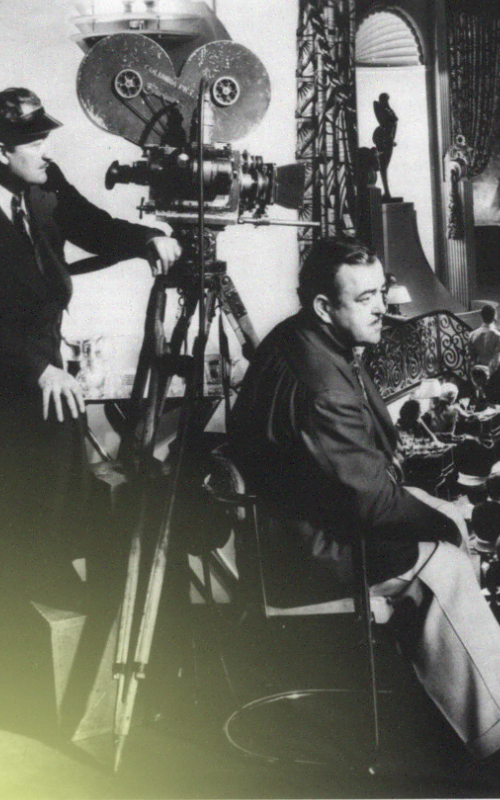
Dubbing originated in the film industry in the late 1920s, shortly after the arrival of sound-synchronized film. Studios quickly discovered that movies produced in one country couldn’t easily be sold in another, and the solution was to re-record dialogue with local voice actors.
The technique spread throughout the 20th century and became standard for international film and television distribution in markets like Germany, France, Italy, and Spain.
For most of that history, dubbing required professional voice actors, a dedicated recording studio, experienced audio editors, and weeks of production time per language.
That made it inaccessible to anyone outside major broadcast organizations. The AI revolution of the past several years has changed this entirely.
Why Dubbing Outperforms Subtitles for Engagement
When viewers can listen in their native language, they don’t have to divide cognitive attention between reading and watching. This is especially impactful for educational content, product demonstrations, and storytelling-driven formats where nuance and tone carry significant meaning.
YouTube’s own internal data from early auto-dubbing tests showed measurable increases in watch time and international subscriber growth on channels that enabled dubbed versions of their videos.
The Language Barrier Problem on YouTube
Roughly 60% of YouTube content is produced in English. Yet only about 20% of the world’s internet users are native English speakers. That mismatch represents an enormous opportunity. Creators who localize content for Spanish, Portuguese, Hindi, Japanese, and other major languages can tap into entirely new audiences, often with minimal competition from other creators already serving those markets.
YouTube dubbing, whether through YouTube’s native tools or third-party platforms, is the most direct path to bridging that gap.
YouTube’s Native Auto-Dubbing Feature
What It Is and How It Works
YouTube launched its native auto-dubbing feature in December 2024 as part of a broader investment in AI-powered creator tools. Powered by a collaboration between Google DeepMind and Google Translate, the feature automatically detects the spoken language in an uploaded video and generates dubbed audio tracks in supported target languages. No manual setup is required.
By June 2025, YouTube auto-dubbing had expanded access to over 80 million creators through the YouTube Partner Program, making it one of the most widely distributed AI dubbing deployments in history.
In total, YouTube supports over 20 languages as of mid-2025, with the platform publicly committed to expanding this list. The YouTube Help Center maintains the most current list of supported language pairs.
Who Is Eligible?
As of early 2026, all channels now have access to YouTube’s automatic dubbing. Previously, this feature had been limited to creators in the partner program, but YouTube has now expanded this capability to all users.
How to Enable and Manage Auto-Dubbing on Your Channel
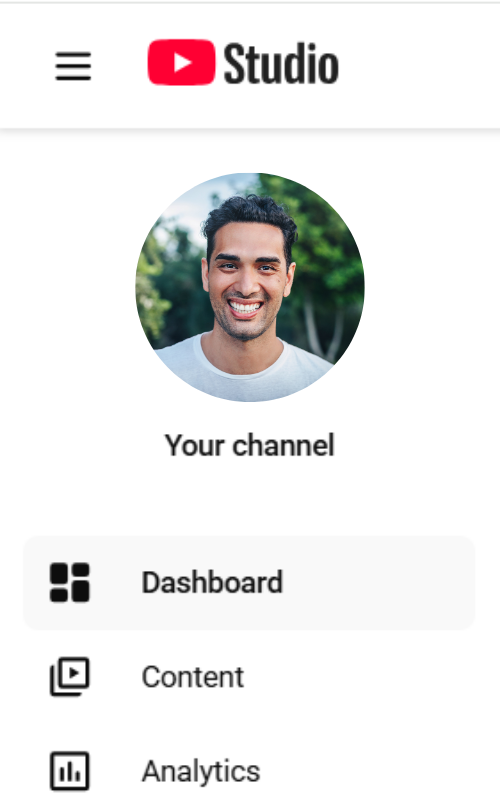
YouTube’s auto-dubbing is designed to be low-friction. Here’s how to work with it:
- Log in: Go to YouTube Studio and sign in to your account.
- Navigate to Settings: On the left-hand menu, click Settings, then select Channel and go to the Advanced settings tab.
- Enable Dubbing: Find the Allow automatic dubbing checkbox and make sure it is selected.
- Set Review Preferences: To check the audio before it goes live, select Manually review dubs before publishing. Specify your preference by choosing either Review dubs in all languages or Review dubs in experimental languages only.
- Confirm: Click Save to apply your changes.
Once published, dubbed versions are surfaced to viewers through two mechanisms: automatic language preference detection based on a viewer’s device or account settings, and a manual language switcher in the video player.
All auto-dubbed videos carry an “auto-dubbed” label in the player, so viewers understand they’re hearing AI-generated audio rather than the original recording.
How Good Is YouTube’s Auto-Dubbing? An Honest Assessment
Where It Works Well
YouTube’s auto-dubbing performs best on a specific type of content: informational and educational videos with clear, structured delivery, a single speaker, minimal background noise, and vocabulary that doesn’t rely heavily on slang, humor, or culturally specific references.
For a creator who publishes calm, well-scripted explainers in English and wants to reach Spanish-speaking audiences, the native feature can be a genuinely useful, zero-cost tool.
Known Quality Issues
Outside of those ideal conditions, auto-dubbing has well-documented limitations creators should understand before relying on it.
The synthesized voice often sounds flat and emotionally neutral, stripping away the warmth, enthusiasm, or authority that defines a creator’s on-screen persona. Timing and lip-sync misalignment are also common, particularly when the rhythm or word length of the target language differs significantly from the source.
Idiomatic expressions, humor, culturally specific references, and brand names are frequent stumbling points in translation, and several creators have publicly reported cases where the auto-dubbed version introduced unintended profanity that wasn’t present in the original.
The dubbed tracks also don’t carry over background music, room tone, or environmental sound, which can make the audio feel thin compared to the original.
Creator Frustrations
Beyond pure quality, creators have raised concerns about the level of control they have over the feature. When a dub is inaccurate or awkward, there is no line-by-line editing interface. The only options are to delete the dub entirely or leave it live as is.
The feature launched as opt-in by default for eligible channels, meaning some creators unknowingly published AI-generated audio they hadn’t reviewed. Some viewers have reported difficulty disabling dubbed audio on certain devices, leading to frustration when they prefer the original.
Additionally, some creators have even reported seeing a decrease in views after enabling YouTube’s automatic dubs, potentially due to a low-quality viewing experience.

What YouTube Says
YouTube has acknowledged that auto-dubbing is a work in progress and has stated that dubs “may be regenerated to improve quality” as the underlying models improve. A dub that sounds robotic today may be automatically replaced with a better version in the future, without any creator action required.
The platform is actively developing what it calls “Expressive Speech” technology through Google DeepMind. The goal is to capture not just the words, but the tone, emotion, emphasis, and speaking style of the original voice. This is expected to meaningfully close the quality gap between AI dubbing and human voice performance over the coming years.
Third-Party AI Dubbing Tools for YouTube Creators: 3Play Media
YouTube’s native auto-dubbing is a useful starting point, but it has real ceilings: limited language support, no editorial control, and AI output that isn’t reviewed before it reaches your audience.
For creators and organizations that need more, 3Play Media’s YouTube dubbing solutions offer a professional-grade alternative built around accuracy, accessibility, and scale.

AI Dubbing with Human Quality Review
The core difference between 3Play Media’s approach and a raw AI output is the human layer. 3Play Media combines AI-powered speech synthesis with professional review to catch the mistranslations, unnatural phrasing, and cultural missteps that automated systems routinely miss.
With an international marketplace of language experts, 3Play Media ensures that every dubbed track is vetted for accuracy and local nuance. The result is dubbed audio that’s ready to publish with confidence, not something you have to preview with your fingers crossed.
This matters especially for brands, educational institutions, and media organizations where a mistranslated line or an unintended tone shift can have real consequences for credibility and audience trust.
Integrated Captions and Transcription
One of 3Play Media’s clearest advantages is the ability to handle dubbing alongside 99%+ accurate captioning and transcription in a single workflow. Dubbed audio and translated captions are complementary accessibility tools, and getting both from one provider means consistent translations across audio and text.
Viewers who are deaf or hard of hearing, watching without sound, or learning the target language benefit from having both available. Managing them separately through different vendors introduces unnecessary risk of inconsistency.
Built for Scale
For content teams publishing regularly across multiple languages, 3Play Media’s platform is designed to handle volume. Individual creators, enterprise content teams, and e-learning platforms all have different throughput needs, and the service is structured to accommodate them.
Rather than processing one video at a time through a browser extension, organizations can integrate dubbing into their broader content production and publishing workflows.
A Trusted Localization Partner
3Play Media has a nearly 20-year track record in video accessibility, working with universities, media companies, and enterprise content teams to meet compliance standards and serve diverse audiences.
Dubbing is one piece of a broader accessibility strategy that includes captions, audio description, and translation services. For organizations that take accessibility seriously, having a single partner who understands how all of those pieces connect is a meaningful operational advantage.
How AI Dubbing Works
Most AI dubbing tools, including YouTube’s native feature and every third-party option above, operate on a four-step pipeline.
Automatic Speech Recognition (ASR): The original video audio is transcribed into text. The accuracy of this step sets a ceiling on everything that follows, since transcription errors compound through translation and voice synthesis.
Translation: The transcript is converted to the target language using neural machine translation. This is where idiomatic language, humor, and cultural references are most likely to break down, because literal translation rarely preserves intent across languages.
Text-to-Speech (TTS): The translated text is converted to spoken audio using synthetic voice generation. Modern TTS systems have improved dramatically; the best of them produce speech that is nearly indistinguishable from human voice in isolated listening tests.
Voice Matching and Cloning: The synthetic voice is adapted to resemble the original speaker in pitch, cadence, accent, and delivery style. This is the frontier step where the most active research and development is concentrated.
Multi-speaker detection adds an additional layer of complexity, requiring the AI to identify when different people are speaking, separate those voices, and apply individual voice profiles to each. Tools that handle this well are significantly better suited to interview-format or multi-host content.
The most persistent limitation across all AI dubbing tools remains the replication of emotion, humor, and natural conversational cadence. These are deeply human elements of speech, and while the technology is improving quickly, current models still flatten the expressive range of the original speaker to some degree.
AI Dubbing vs. Traditional Dubbing for YouTube
Traditional professional dubbing involves casting voice actors who match the original speaker’s gender, age, and vocal range; booking studio time; directing the recording session; and editing the audio to match lip movements on screen.
For a feature film or long-running TV series, this process can take weeks per language and the cost is often prohibitive.
AI dubbing compresses that timeline to minutes or hours. There is no casting process, no studio booking, no iterative recording sessions. A single upload can be processed into a dozen languages simultaneously at a fraction of the cost.
The tradeoff is quality, specifically in emotional expressiveness and cultural nuance. A skilled human voice actor brings lived experience and intuition to a performance that AI models can only approximate.
For high-stakes brand content, advertising, or prestige productions, human voice actors remain the gold standard. For regular YouTube uploads, educational content, and product tutorials, AI dubbing is increasingly good enough that the speed and cost advantages are well worth the tradeoff.
For professional-grade translation and localization needs, a hybrid approach combining AI drafts with human review is often the most effective path.
YouTube Dubbing Use Cases
Content Creators and YouTubers: The most direct beneficiaries. Dubbing a well-performing video into five languages can multiply its potential audience by orders of magnitude. Channels in tech, travel, fitness, and personal finance have seen some of the most dramatic international growth through localization.
Educators and E-Learning Platforms: English-centric online education leaves billions of learners behind. Dubbed courses and tutorials make knowledge genuinely accessible to non-English speakers, not just technically available. This aligns with accessibility best practices that benefit all learners regardless of language background.
Businesses and Marketers: Product tutorials, onboarding videos, and explainer content are ideal dubbing candidates. Localizing these assets requires no additional shooting, only audio replacement, making it one of the highest-ROI localization investments available to content teams.
Entertainment and Media: Movie trailers, show clips, and interview content can reach global fan communities in their native languages without requiring subtitle literacy. This is particularly valuable on YouTube, where engagement signals like watch time and comments drive algorithmic distribution.
Podcasters: Many podcast creators are publishing video versions of their shows on YouTube. Dubbing these into additional languages opens a new dimension of international audience growth that would otherwise require entirely separate productions.
Nonprofits and Advocacy Groups: Organizations communicating across language barriers, whether for public health, humanitarian response, or civic engagement, can use AI dubbing to amplify messages across communities that would otherwise be out of reach.
Best Practices for Getting the Best Results from YouTube Dubbing
Before You Record
Speak clearly and at a moderate pace. Fast speech, heavy regional accents, or overlapping dialogue reduce transcription accuracy, which compounds downstream through every stage of the dubbing pipeline. If you’re scripting your content, consider how your phrasing will translate.
Phrases that rely on wordplay, slang, or culturally specific humor are the most likely to fail in translation.
Production Quality
Clean audio with minimal background noise and echo significantly improves speech-to-text accuracy, which is the foundation of the entire dubbing pipeline.
Record in a treated space with a decent microphone. The better the input, the better the dub.
After Publishing
Pair dubbed audio with translated captions. Dubbing and captions are complementary, not competing. Viewers who are deaf or hard of hearing, watching in a noisy environment, or learning the target language benefit from having both. Professional captioning services ensure accuracy that auto-generated options often miss.
Test with native speakers before publishing a dub in a language you don’t speak. A fluent reviewer will catch mistranslations, awkward phrasing, and cultural missteps that automated tools will not flag.
Finally, iterate. YouTube has stated that dubs may be regenerated automatically as models improve. Revisit your highest-performing videos periodically and regenerate dubs to take advantage of ongoing model updates.
YouTube Dubbing ROI Calculator
Dubbing your YouTube content into new languages opens the door to audiences (and ad revenue) you’re currently missing. Use the calculator below to get a rough estimate of potential CPM earnings by expanding into new markets.
Simply enter your channel’s monthly views and current average CPM*, then select the countries you’d like to reach — we’ve included eight example languages to choose from.
Keep in mind this is a very rough estimate based on average CPM benchmarks and assumes your dubbed content performs similarly to your existing videos. Actual results will vary based on your niche, audience engagement, content quality, and how well your dubbing resonates with local viewers.
*CPM (cost per mille) is the amount advertisers pay per 1,000 video views.
Conclusion
YouTube dubbing has moved from a studio-only production technique to an accessible, affordable, and increasingly powerful tool for any creator who wants to grow beyond their native language market.
YouTube’s native auto-dubbing feature offers a compelling zero-cost starting point. But its limitations are real: voice quality, limited language support, and minimal creator control mean it isn’t the right solution for every use case or every content type.
Third-party tools like 3Play Media fill the gap, offering more languages, better voice fidelity, multi-speaker support, and granular control over output. The technology is evolving fast, and the window to differentiate through multilingual content before it becomes table stakes for every creator won’t stay open forever.
The time to start localizing is now. Review your best-performing videos, identify which languages represent your largest untapped audiences, and choose the dubbing approach that fits your workflow and budget.
Explore 3Play Media’s
YouTube Dubbing Solutions
Start reaching a global audience today.
Get StartedYouTube Dubbing FAQs
Go to the video’s settings menu, select “Audio track,” and choose the original language to override the auto-dubbed version.
YouTube’s auto-dubbing feature uses AI to automatically translate and dub videos into other languages. It’s currently available to eligible creators in select languages.
YouTube’s AI dubbing can handle general speech reasonably well, but it may struggle with accents, technical terminology, and nuanced tone or emotion.
No, YouTube dubbing adds an alternate audio track, and the original audio is always preserved and available to viewers
Yes, YouTube’s auto-dubbing feature is provided at no cost to eligible creators through YouTube Studio.
Filed under
About the author

Share this page
Related Posts
-
 Read more: 8 Best AI Dubbing Tools in 2026
- Dubbing
8 Best AI Dubbing Tools in 2026
-
 Read more: What Is AI Dubbing? The Complete Guide for 2026
- Dubbing
What Is AI Dubbing? The Complete Guide for 2026
-
 Read more: What Is Pulse by 3Play Media? A Complete Breakdown
- Pulse
What Is Pulse by 3Play Media? A Complete Breakdown