
U.S. adults spend an average of about 6 hours per day consuming video. According to Cisco, 82% of the world’s internet traffic will be video by 2022 – an increase from today’s estimated 80%. As the amount of video increases and technology continues to develop at exceptionally fast rates, expectations and trends for video change as well.
Verizon Media partnered with Publicis Media to examine this evolution of video viewing. Their results come from an online survey of 5,616 U.S. adults age 18 to 54 conducted in April 2019. Below we’ve reviewed their most interesting findings, with a specific look at the critical role of captioning.
Benefits and Usage of Captions
Captions are often associated solely with those who are deaf or hard of hearing. While captions certainly benefit the over 5% of the world’s population has disabling hearing loss, they have an increasingly wide benefit to all viewers.
We know from prior research that 80% of people who use captions aren’t Deaf or hard of hearing. If consumers aren’t using captions as an accommodation, why are they expecting and wanting captions? There are a number of reasons noted:



Captions provide many benefits in learning environments, such as greater focus, and better comprehension. In a national research study conducted with Oregon State University, 52% of students said they found captions helpful as a learning aid by because it improved comprehension. Captions were also found to provide a better viewing experience overall, as it allowed users to follow along and consume information through multiple senses.
Whether consciously or not, it seems that many viewers are noticing these benefits, and thoroughly enjoying captioned content. The survey published by Verizon Media and Publicis Media found that “consumers expect and want captioning options.” Clearly, captions are in high demand by many viewers – by both those who are watching videos with and without sound.
When the sound is on, captions have been shown to spike interest in video content. Additionally, 41% of videos are incomprehensible without sound, and captions can provide the context necessary to consuming and understanding the content.
Consumers Expect and Want Captions
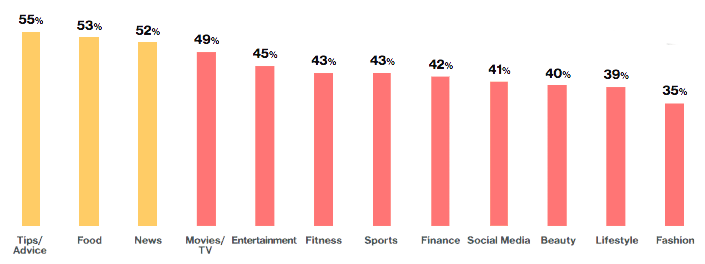
While captions seem to be wanted on most types of content, the expectation for captioning varies by content type. The expectation to find captions are greater for instructional and informational content such as news content, food content, or other tips/advice content. Over 50% of the survey respondents expect to find captions on these types of content.
Captions for Advertisers and Marketers
Viewers aren’t the only ones that benefit from captions, however. Advertisers and marketers are finding captions beneficial as well. The survey found that open captions positively impact ad performance on mobile in the following ways:



These findings are consistent with results from a Facebook video ad study, which reported that captions increase view time on Facebook videos by 12%. Additionally, Verizon and Publicis found that captions show an improvement in several areas within the first 6 seconds of a video on both mobile and desktop, including:
- Stirred my emotions – 42% lift with captions
- An ad people will talk about – 20-21% lift with captions
- Unique – 214% lift with captions
- Informative – 14% lift with captions
- Told me something new – 14% lift with captions
- Believable – 4% lift with captions
Additional benefits to marketers and advertisers include easy creation of derivative content, easy translation into a foreign language, and increased SEO and video views.
Easy Creation of Derivative Marketing Content
If you already have captions or transcripts, you can more easily pull direct quotes from existing content with a simple copy-paste. This might be useful for customer testimonials. Additionally, already written content can be turned into outlines for a presentation, report, blog post, or ebook.
Easy Translation into Foreign Languages
Getting your video content transcribed is the first step in creating subtitles in foreign languages, which is crucial in today’s global economy. A whopping 80% of YouTube views coming from outside the US and eight of the top 10 countries with the most YouTube users are non-English speaking countries.
Increased SEO and Video Views
—
Ready to give your viewers what they want and expect? Discover the 10 crucial questions to ask when selecting a captioning vendor.